

We know that creating a product manufacturing specification is extremely crucial. Often, suppliers do not deliver the right product to your doorstep. In case you have received a product that was not as per your expectations, then the likely reason was a weak – or no – specification.
To put it simply, a manufacturing specification is the most important document that stands between your product concept and a real physical product that is manufactured consistently and with quality. Most teams give the BRD little more than a rough idea, a verbal agreement, or a single email thread, which does not serve as a controlled document outlining specifications required for manufacturing.
According to studies, over 70% of manufacturing delays are due to manual document handling. Manufacturing specifications manage this at the point of origin. Manufacturing specifications help lessen production downtime by giving everyone an easily accessible instruction set they can all refer to. This helps reduce miscommunication between teams and suppliers. It also helps workflows keep moving and make progress without hitting walls from outdated or broken documentation. The manufacturing specification is often an overlooked document.
You would be surprised how many manufacturers are given detailed product designs but essentially guess what materials to procure and what the unit cost of a manufactured good will be.
In this article, we will break down exactly what a manufacturing specification is, why it is critical to product quality, what it should include, and how to write one that manufacturers can actually follow without guesswork.
What Is a Manufacturing Specification?
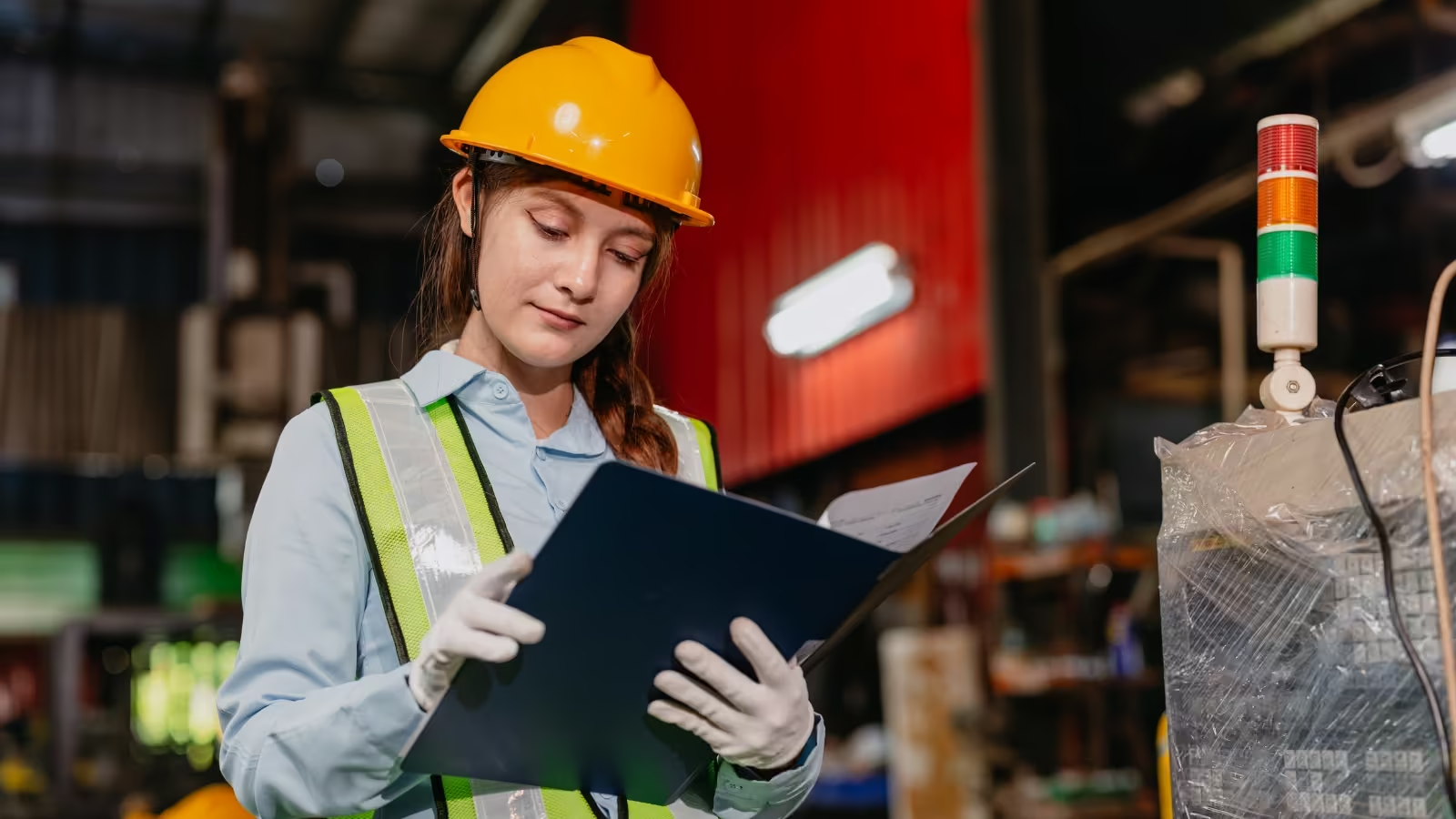
A manufacturing specification(notably a ‘manufacturing spec,’ ‘product specification,’ or ‘spec sheet’) is a formal document that defines exactly how a product must be manufactured, what materials and components it must use, and what quality standards it must satisfy in the factory before shipping or acceptance.
In other words, a production specification answers three questions for anyone making your product.
- What are we actually building?
- How should it be constructed and using which materials or processes?
- How do we determine if it was built correctly?
A manufacturing specification is technical, measurable, and unambiguous – unlike a general product description or marketing brief.
Because it is written, a factory floor operator, engineer, or quality inspector who may never have spoken to you can get it right the first time.
Key Takeaways
- A manufacturing specification is a technical document that defines what to build, how to build it, and how to verify it is correct.
- Defects, rework, and rejected shipments are often the result of unclear requirements and omitted tolerances.
- A drawing is not a specification. A good specification should cover material, dimension, process, finish, packing, and testing.
- Get your manufacturer involved early on and maintain constant version control of the specification to sidestep costly miscommunications as production scales.
Manufacturing Specification vs. Product Requirements
One must differentiate a manufacturing specification from a product requirements document.
Generally, the PRD defines what problem the product solves and what features the product needs. It is written for a business or design audience.
A manufacturing spec takes those requirements the dimensions, tolerances, materials, finishes, assembly steps, and test criteria into technical detail a factory can use.
A PRD defines the ‘why,’ while a manufacturing specification spells out the precise ‘how’.
Why Manufacturing Specifications Matter
A detailed manufacturing specification helps eliminate avoidable costs and boosts efficiency, thereby delivering better results at a lower cost.
- Consistency across production runs– If there is no written spec, quality will drift from batch to batch, especially across multiple factories or multiple shifts.
- Fewer defects and returns – Manufacturing errors are caused primarily by ambiguity. A clear specification makes you worry-free on the production floor.
- Faster supplier onboarding: A well-documented spec allows you to add or switch manufacturers without having to re-explain your product specifications from the beginning.
- Stronger legal and quality protection– If a defect occurs, a documented specification gives you an objective standard to hold suppliers accountable to.
- Lower total cost– Rework, scrapped inventory, and expedited reshipments are far more expensive than the time spent writing a thorough spec upfront.
In other words, the quality of your manufacturing specification directly predicts the quality of your finished product.
The Core Components of a High-Quality Manufacturing Specification
A manufacturing specification should contain these core items.
Most quality and engineering teams follow the framework, though no product needs all of them.
1. Product Overview and Identification
Start with the basics: the product name, SKU or part number, revision number, and date. Many product designers include a brief statement of use within this document to maintain context if the document is ever separated from the other files.
2. Technical Drawings and CAD Files
Every manufacturing specification should cite or include dimensional technical drawings, CAD models, or 3D renderings. These offer the visual and geometric underpinnings that words alone cannot succeed in expressing.
3. Materials and Components
List every material, raw component, and sub-assembly required, including approved substitutes if any. Specify:
- Material type and grade (e.g., 304 stainless steel, ABS plastic, 100% cotton twill)
- Supplier or brand requirements, if applicable
- Certifications required (e.g., RoHS, REACH, FDA compliance)
4. Dimensions and Tolerances
This is one of the most critical sections of any manufacturing specification.
Define exact measurements along with acceptable tolerance ranges (e.g., ‘50mm ± 0.2mm’). Tolerances prevent both over-engineering (unnecessary cost) and under-engineering (functional failure).
5. Manufacturing Process Requirements
Describe any treatment or processing that is needed to convert your material to a form that can then be assembled into a product.
For example, if you are using steel, heat treatment may be necessary. If you are casting a polyester product, injection moulding may be needed.
6. Finish and Appearance Standards
Often overlooked, cosmetic requirements are one of those aspects that can ruin an entire shipment. Specify the surface quality, colour matching (Pantone codes preferred), texture, gloss level, etc.
Identify defect limits such as no visible scratches longer than 2 mm.
7. Packaging Specifications
The designation of the packaging materials, the requirements for labelling, barcodes, box sizes, and how units should be grouped for shipping (e.g., units per carton, carton weight limits).
8. Quality Control and Testing Criteria
This section defines how the finished product will be verified. Include:
- Inspection method (AQL sampling, 100% inspection, etc.)
- Acceptable Quality Limit (AQL) levels for critical, major, and minor defects
- Functional or performance tests (load testing, drop testing, electrical safety testing)
- Required certifications or compliance testing (CE, UL, ISO, etc.)
9. Regulatory and Compliance Requirements
State as specifically as possible any relevant regulations applicable to the product, if any. For example, safety, environmental, and labelling.
10. Revision History
The specification for the product keeps changing. The product is on different revision levels. The engineering department has to regularly follow all these changes.
Teams need a straightforward table that logs all the changes made.
Types of Manufacturing Specifications

Manufacturing specifications are generally grouped as design specifications, material specifications, process specifications, performance specifications, quality specifications, packing specifications, and regulatory specifications.
Design Specifications
The design specification of a product refers to its function, form, and overall performance. Designers write it before the product goes into production. In terms of technology dwg. it will have to cover everything technical about a given product, including its geometry, dimensions, etc.
A design specification, for example, will describe both the intended use case of a product and how the finished product should visually and tactically appeal to an end user.
Overall, a manufacturing design specification connects product design with the process of manufacturing. It guarantees that everyone is on the same page about a product’s function and final design.
Transform Automotive Manufacturing With Cerexio Manufacturing Execution System
Cerexio Manufacturing Execution System (MES) delivers complete visibility across your company’s automotive production by connecting machines, operators, production lines, quality inspections, inventory, and scheduling within one intelligent platform.
The Cerexio system streamlines manufacturing workflows, ensures full traceability, improves production accuracy, minimises downtime, and enables manufacturers to achieve higher efficiency, consistent quality, and operational excellence.
Unlock AI-Driven Automotive Production With Industry 4.0 Capabilities
Cerexio MES combines artificial intelligence, intelligent automation, predictive analytics, digital twins, Industrial IoT connectivity, and real-time monitoring to optimise every stage of production.
These Industry 4.0 capabilities predict equipment failures, automate workflows, reduce material waste, lower maintenance and labor costs, improve Overall Equipment Effectiveness (OEE), and maximise profitability across automotive manufacturing operations.
Call for a personalised demo.
Cerexio-AI Power Smoothly Integrated.
From Assembly Line to AI Line: What Comes Next for Car Makers
The automotive manufacturing industry is slowly becoming more efficient and smarter with the implementation of AI, but it is not just one technology or one moment of change. AI is gradually reshaping how we design and control vehicles. It plays a role in automotive manufacturing by enhancing the vehicles through design testing, production, and operational roll-out. Artificial intelligence is everywhere in modern car factories, from predictive maintenance and computer vision quality control to generative design and digital twins. It is now the connective tissue that runs through it all.
This does not imply that humans will no longer play a part. The companies achieving the most success appear to view AI as something that will empower skilled workers, rather than having AI replace them altogether. The factories of the future will have no people, but people and intelligent systems working in real partnership. Each will be doing what they do best.
As the technology matures further, one thing seems reasonably safe to predict: those automotive manufacturers which embrace AI smartly and not reluctantly will be the ones setting the pace for the rest to follow.
FAQs About the Role of AI in Automotive Manufacturing
AI predictive maintenance analyses sensor data—vibration, temperature, acoustics—from robotic arms and machinery using machine learning models. It detects anomalies before failures occur, scheduling repairs proactively. This reduces unplanned downtime, extends equipment lifespan, and lowers maintenance costs across production lines.
Computer vision systems use trained neural networks to scan components and welds at high speed, detecting micro-defects invisible to human inspectors. They compare images against reference standards in milliseconds, flagging deviations for correction before assembly continues downstream.
Digital twins are virtual replicas of physical production lines, fed real-time data from IoT sensors. Manufacturers simulate process changes, test layouts, and predict bottlenecks before implementing them physically, reducing costly trial-and-error on the actual factory floor.
Time-series forecasting models, such as LSTM neural networks and gradient boosting algorithms, analyse historical demand, supplier lead times, and market signals. These techniques predict parts shortages and demand fluctuations, enabling manufacturers to adjust procurement and inventory dynamically.
Cobots use force-sensing technology and AI-driven motion planning to work safely alongside humans without safety cages, unlike traditional robots isolated for safety. They handle precision tasks—fastening, welding assistance—while adapting in real time to human movement.